
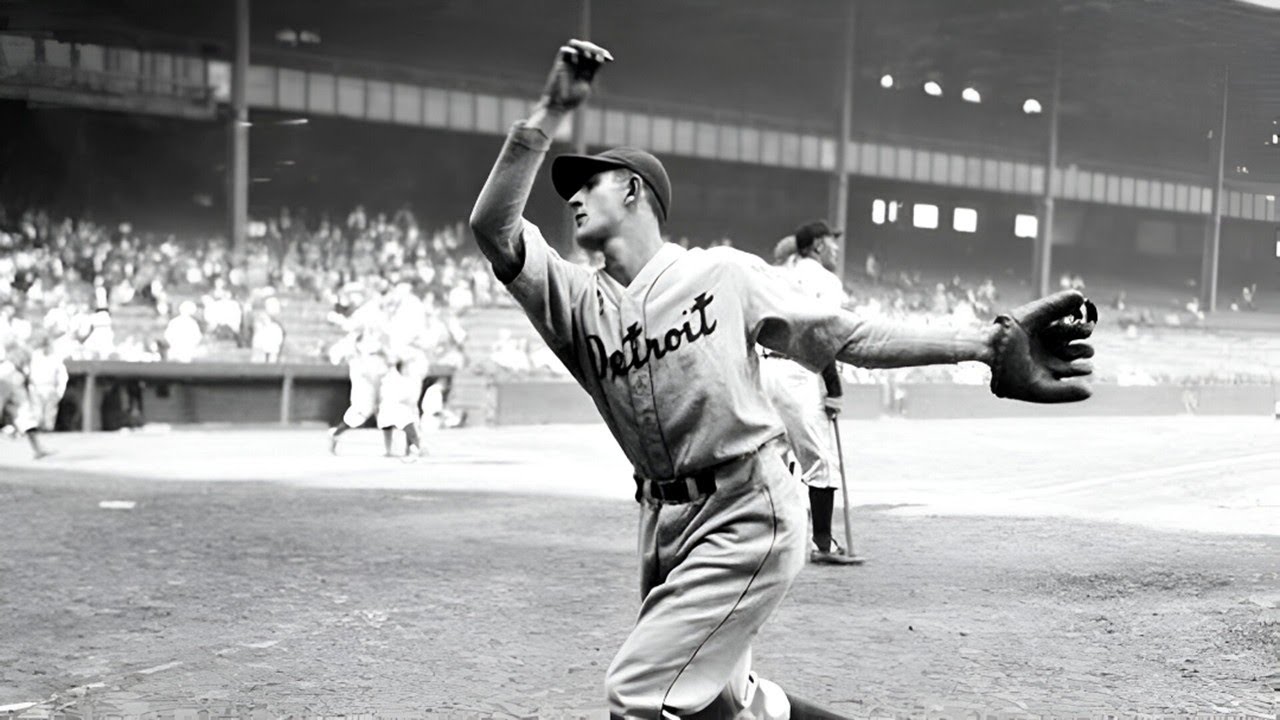
Submarine pitchers, a unique class of hurlers
It’s a difficult delivery to master, but if
you can do it, the motion is highly effective. Pitcher Carl Mays, seen here, dominated hitters
in the 1920s with a rising fastball that dropped sharply, Dan Quisenberry did the same
as an elite closer during the 1980s, and Tyler Rogers reminds us of the delivery today. I’m talking about submariners, guys who release
the ball at or below knee level – often just above the ground – with the torso bent and the
arm swinging upward like Byung Hyun Kim or Kazuhisa Makita, seen here during
the 2014 world baseball classic. Let’s talk about submarine pitchers, a unique
class of hurlers in professional baseball. *** Jack Warhop was the first full-time submarine
pitcher in major league history. As you might imagine, his unorthodox delivery baffled some
batters and the hurler had several good seasons, but he did lead the American League
twice in the number of hit batsmen. I’m guessing some batters just didn’t know when
to get out of the way of the unusual pitch. Now, Carl Mays was an excellent pitcher. He won twenty games five times and amassed hall
of fame caliber statistics, but unfortunately, Mays is usually remembered for throwing a pitch
that unintentionally killed Ray Chapman in 1920. One pattern to mention at
this point is that a great number of submarine pitchers turned
to the motion after arm injuries. Elden Auker’s shoulder injuries from playing
football is the reason why he switched from sidearm to underhand. And from 1933 to 1942,
Auker was the last big league starting pitcher with a true submarine delivery. Since then,
MLB underhanded hurlers have been used in relief roles, often to get guys out from
right or left side, and to close out games. Not unlike Elden Auker, Ted Abernathy injured
his arm in high school,and that pushed him to change his motion from an overhead
delivery to a sidearm pitching style. As a sidearm pitcher, Abernathy reached
the major leagues, but he did not enjoy success after surgery in 1959, and his
reemergence as a highly effective submarine reliever – twice he led the NL in saves and
three times appearing in 70 games or more. I can’t help but see these underhanded artisans as
having a relationship to knuckleball pitchers who often turn to the pitch after arm injuries
or as a path to reach the big leagues. Now, let’s turn to East Asia. Japan’s first submarine pitcher in
professional baseball was Michio Shigematsu, who began using the delivery in 1936 after
being converted from a regular pitching style by one of his coaches. Shigematsu
had a career ERA of 3.06 during the early years of Professional Baseball in Japan.
And that excellence made him stand out. Indeed, the submarine style achieved
greater acceptance in Japan for its effectiveness against same-side
batters and its reputation for being less stressful on the shoulder and
elbow in comparison to overhand deliveries. Shunsuke Watanabe, whose career started in
2001, is the most famous Japanese submarine pitcher. His low release point—so
low that Watanabe’s pivot knee nearly scrapes the ground – is one reason why
he received the nickname Mr. Submarine. And others have followed his example. Kazuhisa Makita, another prominent submariner, has a similarly low release point and has enjoyed
success in both Japan and in international play. In South Korea, a number of submarine
pitchers have enjoyed success. Park Jong-hun is one active submariner in
the Korean Baseball Organization and I’ve already mentioned Byung Hyun
Kim who deployed a nasty slider, sinker, and changeup as a member of the
championship Arizona Diamondbacks in 2001. In general, the East Asian baseball
cultures show a greater willingness to develop pitchers with unconventional
mechanics, but that does not mean the submarine pitch is going to disappear
from North America anytime soon. Kent Tekulve, whose career began in 1974, did
not just have great style and cool sunglasses, he was a durable workhorse who appeared in over 1,000 games and finished his career
with a remarkable 2.85 ERA at age 42. Tekulve’s long career is a reminder that the
submarine and knuckleball motions protect arms from injury and allow these players to stay in
the big leagues for a long time; knuckleballers Charlie Hough and Phil Niekro famously stayed
in the show until age 46 and 48, respectively. Dan Quisenberry saved 244 games from 1979
to 1989, and like Tekulve he was one more reminder to Major league baseball of the
underhand delivery’s value, but some people in baseball – scouts and general managers — simply
could not take the pitching motion seriously. Michael Lewis’ book, Moneyball,
and its film adaptation in 2011, highlighted Oakland reliever Chad Bradford
as an example of a talented pitcher the marketplace did not properly value. Here is
a memorable snippet from the film itself. The Athletics were right. They
saw clearly Bradford’s worth, and especially how good he was
against right-handed hitters. Wrapping up, submarine pitchers are
rare, not so rare as knuckleball variety, but they clearly stand out due to their
unconventional delivery and ability to throw rising pitches to the plate that break
dramatically. In an age of high injury rates for high velocity pitchers who can throw over 100
miles per hour, one has to wonder if the pendulum might just swing just a bit towards pitchers with
less injury prone motions and who don’t need 100 miles per hour heat to get guys out, and let’s
not forget something else, they are fun to watch. I want to thank Madoka Swoverland for helping
me with the Japanese language source material. Let me know what you think of this video
in the comments. And thanks for watching.
Submarine pitchers are one of baseball’s most unique and fascinating types of hurlers. From Carl Mays dominating hitters in the 1920s to Dan Quisenberry excelling as an elite closer in the 1980s, and today’s Tyler Rogers, these pitchers release the ball at or below knee level with a distinctive underhand delivery. In East Asia, submariners have also made their mark: Shunsuke Watanabe (渡辺俊介), Byung Hyun Kim (김병현), and Kazuhisa Makita (牧田和久) have brought their own flavor to professional baseball with the rare submarine style. This video examines their mechanics, history, and why submarine pitchers remain a rare but highly effective weapon in the game.
#SubmarinePitchers #CarlMays #DanQuisenberry #TylerRogers
#ShunsukeWatanabe #渡辺俊介 #ByungHyunKim #김병현
#KazuhisaMakita #牧田和久 #BaseballHistory #UniquePitchingStyles
NPBHUB.COM | The Fanbase of Nippon Baseball & Nippon Professional Baseball