
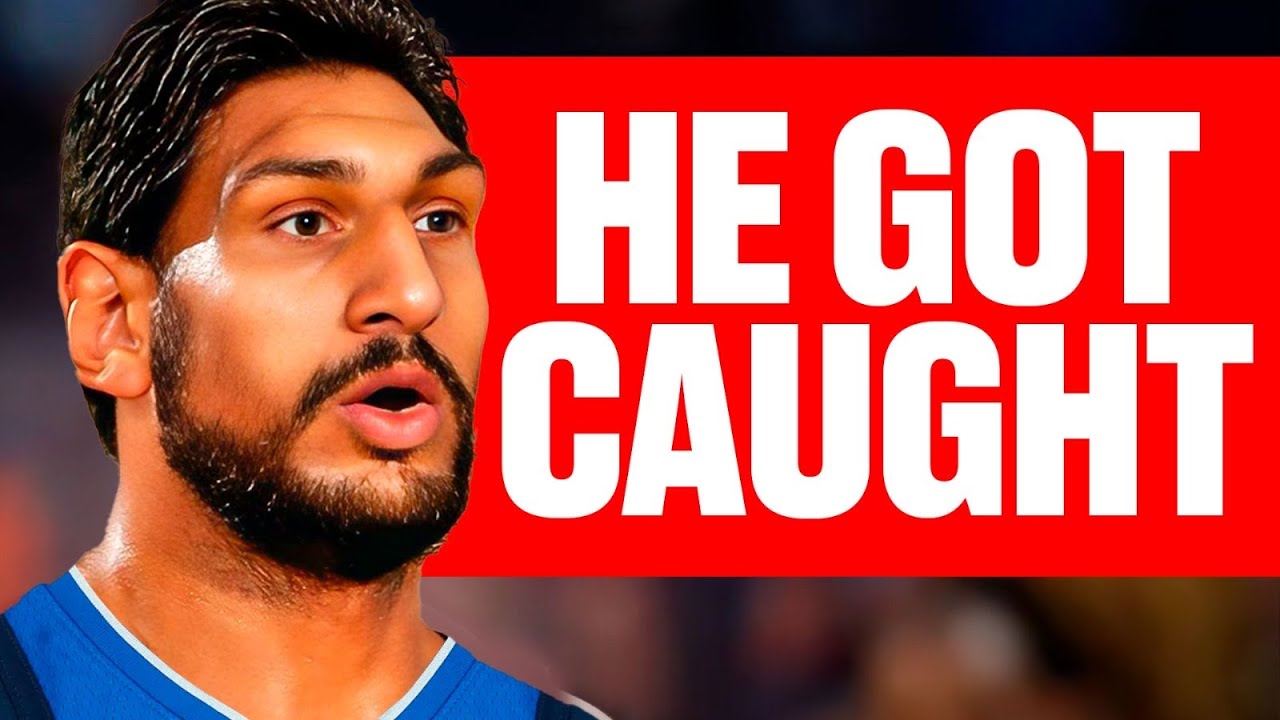
What Happened To India’s Only NBA Player Ever?
The NBA is a global league. More than 43 countries
have produced an NBA player. Almost 12,000 players have been drafted. And yet, only one of them
came from India. Despite having a population of over 1.4 billion people, which marks
17.3% of the entire planet’s population. So, how did Satnam Singh do the impossible and become
India’s first and only NBA player? India has never had a player drafted to the NBA. Hopefully he
can be that role model that Indian basketball solely desires so he can be the poster child
for for Indian basketball. It is one of the great NBA draft stories of all time and you’ll
be shocked to find out what happened to him in his career because in India the best basketball
players aren’t even professional. They have to work jobs on the side just to make ends meet
and the sport is discouraged in the country. Very few kids turn to basketball as a way
out because no matter how good you are, playing pro hoops isn’t a reality in their world
because nobody of the billions of people to come from India had ever made it until Satnam
Singh changed that. He came from a small village with a population of just 8,000 people.
Growing up on a farm, he always had big dreams, but that’s all they were, dreams. He was always
told growing up his responsibility would be to take over the family farm. and he even had to
leave school at a young age to support his family with maintenance and chores. Basketball wasn’t
even in the equation at this point. He didn’t even know what the sport was, but what he was
was abnormally tall for his age. At 10 years old, he was already 6’6. His father was 7’2 and
his grandmother was 69. And because of this, people would always suggest to his father he
should start playing basketball. And after reading in a newspaper that an academy was opening up near
their hometown looking for anybody over 6t tall, his father suggested that he goes and gives it a
try. At first, Satnam was just playing for fun. He’d never even seen the sport on television and
at first thought he was starting up in volleyball. But once he started playing, he fell in love with
it. And after realizing his natural talent, his family and friends got behind him and supported
his new dream. He was so good so quickly that his first ever coach even said that he was born to
play basketball. And at 10 years old, he made the bold decision to leave home and train full-time at
one of the few basketballies in all of India. When I was in 9 years old, once I stopped basketball in
India, you know, and my family stayed like four or five hour way to my where I’m playing ball. So
my dad think is that uh I think it’s very hard for my son and he’s only 9 years old and how can
he play ball but I guess so far you know. Mhm. Now while this was a great opportunity it didn’t
come without hardships. The facilities were poor. It was an indoor wooden court with holes in the
roof making it unbearably hot during the summer. So when Satnam first joined the academy he hated
it. While he enjoyed playing his hometown and family made him want to quit entirely. His
dream felt like a pipe dream and a waste of time. It didn’t matter how good Satnam was. The
opportunities just didn’t exist in India. There was no organized setup or regular tournaments. And
forget about the NBA. There had never even been an Indian basketball player who’d played NCAA college
basketball before. But people back home started to believe that Satnam could be the one that changed
that. A lot of us had this feeling that if it’s going to be anyone from India who makes the NBA,
this could be it. Because at the perfect time, the NBA announced a new initiative to grow the
sport in India and hired a man called Troy Justice as its director of basketball operations who would
discover Satnam and change his life forever. When I moved to India in February of 2010, the first
question I asked was where are the most talented players? And they said you need to go to this
basketball academy in Ludiana. And when I stepped off the train onto the platform at the train
station, first boy that was standing there was Satnam. The head coach came and sat by me and I
said, “You know, this tall boy that I met here, the first one that was in line, you know, how old
is he?” And he said, “You know, he’s uh he’s 14.” And I said, “No.” I said, “He’s not 14. Tell me
his tell me his real age, you know.” He said, “No, he’s he’s 14.” I said, “Well, then I’m really
excited.” Because of his unnatural size, Satnam would have to play in slippers. He couldn’t run
because of it. And that’s because he was a size 19 and there was nowhere in India you could go
out and buy a size 19 basketball shoe. But Troy, after seeing his potential, immediately got on the
phone back home and outsourced a pair of size 19 basketball shoes. And as you can imagine, this
changed everything for Satnam. And after that, the opportunities started flying in, even leading
the Punjabi state youth team to a national championship. IMG Academy, one of America’s top
developmental athletic schools, are always looking for developmental projects. Over the years,
we’ve seen them take on giants like Zach Edi, who they built up from scratch and turned into the
best player in college and NBA lottery pick. Also, Olivier Ryu, the nearly 8 foot giant who just won
a national championship with the Florida Gators. Back in 2015, IMG Academy agreed with the Indian
Basketball Federation to take on four boys aged 14 and under to their academy and they held triyouts
to select the four players and Satnam Singh was the obvious candidate. He was the type of prospect
the coaches fantasize about. He was 67 at 14 years old with the projection to be a 7-footer.
IMG Academy wasted no time. They offered him an athletic scholarship and Satnam, after being
advised by friends and family to pursue his dream, took an 8,000mi leap of faith. But moving to
the United States came with a whole new set of challenges. Satnam arrived barely speaking a word
of English. And it was so frustrating for him not being able to express himself or communicate
with anyone around him. It was hard for him to fit in and integrate himself with his teammates
and classmates because he couldn’t understand anything anyone was saying. But Satnam kept his
head down and focused on the assignment. But even this was difficult. The majority of his training
was spent in the weight room. And this wasn’t what he was expecting. He came to the United States to
play basketball and spent most of his time lifting weights. And this really affected his confidence
in play on the court. Layups and dunks that were second nature for him back home suddenly became
very challenging. His freshman and sophomore seasons were rough. Playing for the junior varsity
team, he averaged less than five points per game in limited minutes. In 2011 though, he was called
up to represent the Indian senior men’s national team at the FIA Asian Championships, becoming the
youngest player in the history of the national team. This was a massive accomplishment and
moment of pride for Satnam. And considering he was the youngest player in the tournament,
he performed very well, even scoring six points on three or four shooting with three rebounds
against Indonesia. Throughout the tournament, Satnam played four times and averaging 9 minutes
per game, he put up 2.5 points and 2.8 rebounds on 56% shooting from the field. It wasn’t anything
spectacular, but it was progress. And while things weren’t going so well at IMG, the most important
thing was he didn’t quit. He kept his head down, trust the process, and in time it paid off.
And while he wasn’t playing much on the court, Satnam was fully committed in the classroom. He
fully dedicated himself to his studies and learned the English language and this helped him more than
any basketball related coaching. He was now able to understand instructions, speak to his teammates
and just communicate with people in everyday life. It enabled him to find joy in basketball again
and you’d be surprised how much of a difference that can make. 3 years I can’t speak English and
now I can speak English. I just go talk. I don’t need anything more than that. Just go talk. Satnam
put a lot of pressure on himself to get better and fully trusted his coaches. He appreciated the
commitment and faith they’d invested in him and didn’t take it for granted. He felt like he owed
it to them to give his all. Culturally in India, you’re taught that when you devote yourself to
someone’s teachings and expertise that you give them the utmost respect and trust and eventually
that paid off. You could see the mindset of how can we get faster, how can we get stronger, how
can we be more powerful, how can we move better. Satnam was in the gym every day perfecting his
skills on the basketball court and going above and beyond in the weight room, becoming stronger,
faster, and doing everything he could in his power to get better. Coaches described him as coachable,
hungry, passionate, hardworking, and the type of player that would run through a wall for them.
His combination of character qualities and natural physical tools gave him the potential to
be great. He was the type of player that responded well to tough love and hard coaching. And the
perfect example of this is right here. Sub. What are you doing out there? You’re playing
soft again. Daddy, aren’t you bad? Turn it to score. You’re playing down to their level. You
make them come up to your level this time. Do you understand? [ __ ] Go back in here and get
his ass. Let’s go. Come on, big boy. Satnam as a prospect was a low post player whose biggest
strength was his strength. But he was also a great passer who could see over the defenses and
make reads. He was team oriented, unselfish with a soft touch and hook shot with both hands as
well as a rapidly improving jumper. In 2013, he was back representing the Indian national team at
the FIA Asian Championships. And when he returned, his improvement was on full display. He received
a lot more playing time. In seven minutes against Thailand, Singh had six points and four rebounds.
But his best game came against Kazakhstan, recording eight points on four five shooting as
well as four rebounds. For the tournament, Singh played a total of 54 minutes, scored 25 points,
made 11 of his 19 field goals, and made 61% of his two-pointers, shooting 60% at the line. He
averaged 4.2 points and 2.7 rebounds in 9 minutes per game, making it pretty impressive stuff from
a high schooler. During the 2014-15 season at IMG, he averaged 9.2 points, 8.4 rebounds, and 2.2
blocks in less than 20 minutes per game. He did this against top competition, playing for
the number two ranked team in the country. And best believe D1 scouts were monitoring his
situation, receiving interest from Arizona, Kentucky, Maryland, Florida, Michigan
State, and Purdue. During the IMG showcase, scouts from all different schools were in
attendance. And this is where he met Travis King, the agent of NBA All-Star Amari Stardomire and
projected lottery pick Cameron Payne. He was immediately fascinated at the now 7 foot Indian
big man. So he set up an individual workout and after seeing him up close and in person targeted
him as a future potential client. The plan for Satnam was to send him to a good college
and have a plan to continue his development. He wasn’t quite ready yet, but his potential
was off the charts. But then he faced a massive setback that had nothing to do with basketball.
The NCAA’s eligibility became a real problem because while Satnam could speak and understand
English, it still wasn’t his native language, and he needed to pass classes with high enough scores
to qualify as a student athlete. Unfortunately, he didn’t. And in the end, despite being good
enough to play D1 basketball, he was deemed academically ineligible after failing to meet
the NCAA’s strict academic requirements. This was a massive blow. The plan had been the same
the entire time from when he arrived in India, he’d stuck to it, did everything that was asked
of him and then suddenly at the last moment that changed and Satnam would have to settle for an
unconventional path. The realistic options were junior college or playing overseas in Europe.
And this is where Travis King intervened. He was asked for his opinion and passionately
believed that going from an elite prep school like IMG to Juko College or some low-level overseas
would be a massive step backwards in terms of coaching facilities and everything else involved.
But Travis King did find a loophole because Satnam Singh was a fifthear senior making him 19 years
old and technically eligible to declare for the 2015 NBA draft. Now this was a long shot that
nobody even considered a possibility. The NBA hadn’t drafted somebody out of high school since
the one and done rule was introduced over a decade ago. But over dinner sitting with Cameron Payne,
Travis King promised Satnam that if he signed with him, he’d get him a foot in the door. So, you
want to sign? Y. Okay. Good. Good. Good. Good. All right. The first line, this is a standard
contract. Everybody in the NBA, as LeBron, James, anybody you see, this is the first thing that they
sign. Okay. Okay. Standard player agent contract. All right, big fella. Welcome to the family,
brother. Yeah. All right, big. His new agent got on the phone and used his connections to
get Satnam through the door at the NBA draft combine in Chicago, which originally he wasn’t
invited to. The draft combine is an annual event where draft prospects get to work out in front of
representatives from all 30 NBA teams. Scouts took a lot of interest in the Indian big man. Satnam
then met up with several NBA teams in the leadup to the draft. The Chicago Bulls, Utah Jazz,
Portland Trailblazers, Indiana Pacers, Houston Rockets, and Dallas Mavericks. He even got to meet
legends like John Paxton, Vlatty Dvac, and Larry Bird. Nothing ended up materializing with most
of these teams. But after meeting them in person, Satnam was invited to several private workouts
with NBA teams, including the Celtics, Wizards, Mavericks, Kings, and Trailblazers. He received
mixed feedback from teams after working out. Some saw him as too much of a project that needed too
much work, while other teams were concerned about his foot speed, ability to change direction, and
keep up with the pace of the game that just seemed too fast for him. There was also some positive
reception, though. A Celtics director described him as a revolutionary stretch five, and a former
Kings coach said, although rough around the edges, that his upside was off the charts. And that
was the selling point going into the draft. Satnam Singh’s potential. He wasn’t a finished
product and was nowhere close to the level of Galileo or Carl Anthony Towns who were the best
prospects in his class for his position. But considering how far he’d come along in such
a short period of time, teams were wondering how good he could become if developed properly
over the next few years. Still though, nothing was concrete or guaranteed. And Satnam went into
the draft with no assurances from any NBA team. He was completely in the dark, carrying the
weight of a country on his shoulders. He entered the draft projected to go undrafted on most draft
boards, but he was seen as a potential wild card that could maybe get selected late second round,
and two or three teams did confirm that he was an option they were looking at on draft night, but
making no promises. As the draft went on late into the second round, it seemed as if it wasn’t
going to happen. Sacramento were very keen on him, but they didn’t have a second round pick.
And pick after pick, more and more teams who were interested in him decided to go with
other prospects. It came down to two teams, Washington at 49 and Dallas at 52. His agent was
in contact with the Wizards. They gave positive signs, but just as their pick was approaching, his
calls went unanswered. And when the pick came in, they went elsewhere. With the 49th pick in the
2015 NBA draft, the Washington Wizards select Aaron White from the University of Iowa. You
know, it’s coming to the end. The building’s emptying out. This is the last team that I know
on this list. This is really it. It all came down to the Dallas Mavericks at 52. This was the
last shot. They were the only team left in the draft that had showed any interest in Satnum. And
that night, the Dallas Mavericks decided to make history. With the 52nd pick in the 2015 NBA draft,
the Dallas Mavericks select Satnam Singh from All of his sacrifice had paid off. Satnam
Singh did it. He became the first Indian player to ever be drafted in the NBA. An
impossible dream he left home at the age of 10 to pursue. And almost a decade later, he
actually did it and became the first Indian-b born player to ever make the NBA. He returned
home a hero, a living icon that proved success stories can come from anywhere. He became the
face of Indian basketball, India’s Yao Ming, and he inspired the next generation of Indian
hoops. But all of this happened in 2015. We are now in 2025. But what happened next? Well,
Satnam debuted for the Dallas Mavericks at 2015 NBA Summer League in Las Vegas. And his first
game came against the New Orleans Pelicans and breakout star Seth Curry. Satnam played
10 minutes, had four points on one of three shooting along with three rebounds. That’ll
get you quick hook even in some league play. Sig rolling to the basket and he’ll shoot free
throw. Camera. Final minute. Third quarter. Wayne’s trying to locate Sing the 7 foot2 inch
Indian import up off to the blastless little drop step maneuver. I like that. And big fella is
going to really hinder the Pelicans last year as a defer unable to connect. Sing face up baseline
shot well short. I look right at Mark and Rick Carow and they are loving it that he’s out on the
a decent first performance. In his second game, he was better in 12 minutes against the Trailblazers
up against lottery picks Noah Vonlay and Myers Leonard. Satnam was solid again with four points
on 50% shooting with three rebounds, but his most promising summer league game came against the
D-League Select. He only played four minutes, but he had four points, four rebounds, and made two of
his three shots. While it’s a small sample size, he made an impactful contribution in limited
playing time. During 2015 NBA Summer League, Satnam averaged 2.6 points and 2.4 rebounds in an
average of 7 minutes per game. But that was to be expected. He’s a long-term project and instead
of joining the Dallas Mavericks in the NBA, he was sent to play for the Texas Legends in the
NBA DLeague for the 2015 16 season to get more playing time and experience. And November
13th, 2015, Satnam made his professional debut playing against the Austin Spurs. And in 9
minutes, he recorded four points, three rebounds, and an assist. Vipers trying to take care of
their business. Sing tries the up and under. Nice feed to Holloway. Shot clock 10 seconds on the
drive. Holloway goes reverse. No good. But it’s followed home by Sing. During his rookie season,
Satnam played 19 games with the Texas Legends, starting in two of them. While he only averaged
eight minutes per game for the season, he did make history in one game in particular. He scored
a season high six points on three of six shooting with six rebounds. Three of those came on the
offensive glass. But this game was historic not for Satnam’s performance, but for the significance
of this game and what it meant because on the other side playing for the Raptors 905 was
Simbul. So from having zero NBA players ever, we got to see two Indian players go headto-head
in a basketball game within the NBA world all in the span of a year’s time. And while Simbar
got the better of this matchup with 13 points and 10 rebounds, none of that mattered. What it
was was a special moment for Indian basketball. will have a 10. The legends have acquired from
the available player. Jordan lobbing it high up to Bular and he throws it down to 20 or let’s cut it
to 10 or let’s get it down from 10 to nine or you I don’t know how you you’re down 8548. [Applause]
That’s nice. And sing with a nice are trying to emulate him by shooting threes first. Kareem Abdul
Jabbar’s comments. We had a chance to speak to Nick Vanexel before the game and he said that I’d
like to see the Legends get to within 40. Sing lays it in from the right side. As a rookie,
Satnam only averaged 1.5 points, 1.5 rebounds, and shot 43% from the field. Evidently,
he was nowhere near ready for the NBA, but nobody expected him to be. Remember,
Satnam was supposed to go to college, but because of his ineligibility, he was forced
to turn pro. And as a result of this, he faced tougher competition. a lot earlier than he was
supposed to. At the end of the D-League season, he returned to play NBA Summer League for a second
year. And after a full season playing with the pros as a part of an NBA organization, the maths
were hoping to see some signs of improvement, but it was more of the same from Satnam. He played six
summer league games, averaged just 1.3 points and 1.2 rebounds, shooting 50% from the field while
logging under 5 minutes per game. These numbers, when paired side by side with his numbers from
his first year in Vegas, are quite disappointing. Same story for the 2016 2017 D-League regular
season. Satnam played just eight games, logged fewer minutes, and regressed in every
single statistical category, averaging 1.3 points, 1.3 rebounds, and had zero blocks all season
despite being the tallest player on the floor. He also shot 33% from the field, down 10% from
his rookie year. Not only was Satnam not showing any improvement, but he was regressing. And in the
NBA world, you don’t have much time, making 2017 NBA summer league his last chance saloon. He’d
played two full years with the Texas Legends. Now, he was drafted based on his potential. So, if he
didn’t show any of that potential in his third summer league showing, it was only a matter of
time before his team moved on from him. It was really now or never for Satnam in his NBA dream.
And unfortunately, it was never because 2017 NBA Summer League was his worst yet. He averaged one
point per game, five rebounds, shot 42% from the field in just 5 minutes per game. All of these
were his lowest averages ever in summer league. And because of that, to no one’s surprise, after
showing no considerable improvement over his two years, Satnam’s contract with the Dallas Mavericks
wasn’t renewed, and no other NBA teams were in a hurry to pick him up either. He never even got
a D-League contract. And that marked the end of his NBA career without playing a single game. But
just because he didn’t play in the NBA didn’t mean Satnam’s basketball career was over. Right after
Summer League, Satnam was called up to play at the FIA Asian Cup, representing his country at this
tournament for the third time. But once again, Satnam underachieved. He only played three games,
averaged one point and.7 rebounds per game, which is insane when compared to his previous numbers
at this tournament. On the screen you can see his stats in 2011 and 2013 which show he put up better
numbers as a high school player than he did as a professional grown adult. You would think that
after these poor performances at the FIA Asian Cup that basketball would be over for Satnam Singh.
But he did get another big opportunity in 2018. Satnam joined St. Dons’s Edge, a professional
basketball team in the Canadian Pro League, which is a respectable pro basketball league
in the North American continent where a lot of NBA outcasts end up playing after failing
to sustain a roster spot in the NBA. Satnam played a lot more in Canada than he did in the
US, actually playing more games there than he did in the D-League. He played 35 games, and
yet again, the numbers were underwhelming. Outside of one game where he had 10 points and
five rebounds against the London Lightning, he never scored in double digits. And for the
season, he averaged just 2.2 points, 1.3 rebounds, and.1 blocks per game in under 6 minutes. It
seemed to not matter where Satnam Singh played basketball. Regardless of the competition, whether
NBA, G-League, FIA, or Canada, he was always putting up the same type of stats. That being said
though, he did have his moments in Canada, some of which were worth watching. Being honest, I think
this is a nice and a good idea because you have so much talent on this points a game. He doesn’t
necessarily score a whole lot as again tomorrow and try to do duplicate uh the first three
quarters try to certainly can. Here’s Satinam Singh now the big man takes it inside and gets
the bucket back in for Keith. Keith shot clock to 10 into Sing. Sing underneath the basket gets
that one to fall. But a big reason for Satnam’s pro failures was mental. He carried a very heavy
burden. the hope of an entire nation weighed on his shoulders. And the way things happen for him
in Dallas really took a toll on him. Sometimes when you feel like you’re meant for something,
you’ve been called the chosen one and it just doesn’t happen for you the way you expect, that
can affect you in more ways than you can imagine. But just as all hope seemed lost, we did get
to see Satnam Singh at his very best playing basketball again. And this came with the
Indian national team at the 2019 FIA World Cup qualifiers. Due to some injuries of other
key players, Satnam Singh was forced to take on a leading role and he finally showed us all
what he was always capable of dominating during these qualifying games. Yinda Singh great pass
to Satnam Singh. Barama count the bucket. Oh, big man going to licks it right back to Anna
Durai. Comes in. Uh-oh. Uh-oh. That’s right. Satinam Singh’s got one too. Jinda back door.
Justin Joseph Satnam Singh. Nice play from India. Satnam Singh. That’s a nice play from the big
man. That’s what he should be doing all game. Two games stood out in particular.
In the first round against Syria, he dropped 18 points and
eight rebounds in 27 minutes. First shot of the game is good to Satnam Singh. Good. Satam Singh with the pick
and roll. Satnam Singh goes up and scores. Back on defense. Oh, it’s uh the Keystone Cops out there.
Satam sing. Oh, we’re still playing down the other end. The mayhem continues. The big man in again
for two. Satnam singers. Oh my goodness. Surely not. He did indeed. He got it through. Satnam
sing. But his best game came against Jordan. Satnam had a double double, played a career-high
35 minutes, and went off for 20 points and 10 rebounds, even shooting an efficient 57% from the
field. Oh boy, they’re getting some easy looks and pass inside and look pass. Satnam going to show us
his jump shot. Jordan hustle back to play defense and then Satan gets inside and [Music] Satnam goes
behind his back. Holy cow. This was exactly the type of boost Satnam needed to revive his career.
reminding not just the world but himself what he was capable of on the hardwood. But then again,
the worst thing that could have happened did happen, and Satnam’s pro career took a turn for
the worst. He was handed a 2-year doping ban for failing a drugs test, which at 25 years old was
a massive setback for his proas aspirations. And ultimately, it marked the end of his playing
career. And while Satnam claims this was completely unintentional, once you have that
cheater and doping tag attached to your name, it’s very hard to come back from. And in his case,
it was over. So now that it’s over, we have to ask the question, why did Satnam Singh’s basketball
career not take off? He always had the potential, but I think there’s a multitude of reasons why
things didn’t work out. Satnam Singh came into the NBA too late and too early at the same time. He
was drafted in 2015 and this marked the beginning of the three-point revolution spearheaded by Steph
Curry and the Warriors. All of a sudden, the game became faster, more three-pointoriented. Less
postplay and less need for sevenfooters. Teams had a lot more success playing with small lineups.
Satnam was a traditional big and NBA teams were no longer seeking players of that profile in a
space and pace league. Now, had he been born in a different time, this wouldn’t have been a problem.
But also, had he come along a few years later, he would have had more opportunities, and he almost
certainly would have played in an NBA game. Over the last few years, the NBA has become less strict
and given more flexibility to G-League players, allowing for two-way contracts and other deals
that can be converted throughout the season, allowing players to come back and forth seamlessly
from the NBA and G- League. When Satnam played, it was still the D-League. That was a lot more
strict. In most cases, you were either on the NBA team or the D-League team. There was nowhere
near as much back and forth as there is today. So, with today’s rule, Satnam almost certainly would
have been called up and played in at least one NBA game, even if it was only garbage time. But,
I think the main thing in hindsight looking back that prevented Satnam from reaching his full
potential was his NCAA eligibility. Everyone knew Satnam wasn’t ready to play in the best league in
the world when he was drafted. He was a raw talent with a lot of potential out of high school.
So making that jump from IMG Academy to the professional game was just too much too soon. You
have to wonder that had he been able to play in college, spent another four years developing in a
similar environment to what he had at IMG Academy, then by the time he was a senior, he’d have had
more opportunities playing and as a result of that, a better chance of being ready for the NBA.
But the fact that he was thrown into the fire, fresh out of high school into the D-League,
that definitely stagnated his development. He wasn’t only not getting better, he was getting
worse. And that’s evident when you look at the numbers. Of course, Satnam did have limitations,
and those limitations were amplified due to the change of how teams play basketball in the
modern game. For his size, he wasn’t a great rebounder or shot blocker, and he struggled
with foot speed and keeping up with the pace of play. Long story short, he was probably too
slow and not good enough to play in the NBA. But just because Satnam isn’t playing basketball
anymore doesn’t mean it was all for nothing. No, this story has a happy ending. He’s a celebrity
now, a big name, and used this to transition into a new career in pro wrestling. And surprisingly,
he’s actually had a lot of success with that. Since 2021, Satnam has been a part of All Elite
Wrestling. He’s had viral moments over the years, participating in major events and even won a tag
team world championship. So, he’s clearly thriving in his new career. And none of this would have
been possible without basketball. WWE the AEW over WWE. I will be the first again first wrestler
from India. I will make another history for Indian in AW. He’s 30 years old now and
I think it’s safe to say things worked out. While he never played an NBA game, he did make
history. He became the first Indian player to ever be drafted. Nobody can ever take that
away from him. He got to play pro hoops, not just in the States, but in Canada, too.
And now he’s a wrestling mega star competing on the world stage. Not too bad for a
farm kid from a small village in India. [Music] Nothing is easy. Everything is hard. If you
are work hard, you will get your opportunity so fast. Never never figure out that nobody
do for you. Nobody got nobody work for you. You have to work on yourself. Don’t wait
for anyone. Just do it. But tell me down below in the comments what you guys think
of Satnam Singh, his journey, his story, and do you agree with me that had he gone to
college, perhaps he would have been able to play in the NBA? Share your thoughts and feedback down
below. And also, if you’ve enjoyed this video, I know you’ll enjoy our last video where we talk
about Japanese phenomenon Yuki Kawamura and Euro League star TJ Shorts, who together will become
the shortest backcourt in NBA history next season. You don’t want to miss that. So, you can
watch it by clicking the big box in the middle of your screen right here. Subscribe
to the channel, like the video, and turn on notifications if new around. And on that note,
is DKM signing out. Until next time, and peace.
What happened to India’s first NBA player and where is he now in 2025? When Satnam Singh was drafted by the Dallas Mavericks in the 2015 NBA Draft he became the first and only Indian born player to ever play in the NBA, but what happened to him?
In 2015, something incredible happened in the world of basketball. A young man from a small village in Punjab, India, stepped onto the global stage in a way no Indian athlete had before. Satnam Singh, standing at an imposing 7 feet 2 inches tall, made history by becoming the first Indian-born player to be drafted into the NBA. The Dallas Mavericks selected him with the 52nd overall pick, sparking a wave of excitement and pride across India. For a country known for its love of cricket, this moment was a beacon of hope for the future of basketball. But that dream quickly faded into silence.
This video explores the untold story of Satnam Singh — his improbable rise, the weight of expectations he carried, and the quiet disappearance that followed. Many fans remember the headlines, the press conferences, and the hope that he would one day step onto an NBA court. But he never did. Not even for a minute. And years later, many are left asking: What actually happened to the only Indian player in the NBA?
Satnam’s journey began in Ballo Ke, a remote farming village with no real access to basketball facilities. Despite the lack of infrastructure, his extraordinary size and raw strength made him stand out. He was spotted early by scouts and selected for a program that would eventually bring him to the IMG Academy in Florida — one of the most elite sports training centers in the world. At just 14 years old, Satnam left behind his family, language, and culture to pursue an American dream. He barely spoke English and had never traveled outside India before, but he adapted quickly and trained relentlessly. At IMG, he improved his skills and began to attract serious attention from NBA scouts.
The 2015 NBA Draft marked a milestone not just for Satnam, but for an entire nation. Yet the fairy tale never quite took off. Because he didn’t play in college, Satnam came into the league as a raw, undeveloped talent. He was drafted more for his potential than his readiness. The Dallas Mavericks sent him to their G-League affiliate, the Texas Legends, hoping he would grow into a viable NBA player. But it became clear over time that the jump from promise to performance was too wide. Despite hard work, Satnam struggled to make a meaningful impact. Injuries, conditioning issues, and the sheer speed and complexity of the NBA game became major hurdles. The Mavericks eventually let him go.
What followed was a series of short-lived stints — some in the G-League, others in minor international leagues. The buzz around his name began to fade, and the media coverage shifted away. He eventually made headlines again, but not for basketball. In 2020, Satnam was banned by the National Anti-Doping Agency in India for testing positive for a banned substance. It was another blow in a career already filled with setbacks.
Today, Satnam Singh has taken a surprising turn. He signed with AEW, a professional wrestling organization in the United States, hoping to reinvent himself in an entirely different sport. For some, it’s a disappointing end to a once-promising basketball story. For others, it’s a sign of resilience — proof that he’s still trying to make something of his platform, even if it’s not on the hardwood.
Satnam’s story is both inspiring and heartbreaking. It highlights the massive challenges that Indian athletes face when trying to break into global sports. The lack of grassroots development, the absence of high-level coaching in India, and the cultural preference for cricket all combine to make success in sports like basketball incredibly difficult. Satnam was a pioneer — but he was also alone. He carried the hopes of an entire country without the support system that most NBA prospects take for granted.
What happened to the only Indian player in the NBA? Satnam Singh’s story is a reflection of what happens when raw talent meets systemic obstacles. It’s a reminder that representation matters, but so does preparation. And it raises a larger question — when will India truly invest in building the foundation needed to produce the next global basketball star?
*Copyright Disclaimer Under Section 107 of the Copyright Act 1976, allowance is made for “fair use” for purposes such as criticism, comment, news reporting, teaching, scholarship, and research. Fair use is a use permitted by copyright statute that might otherwise be infringing. Non-profit, educational or personal use tips the balance in favor of fair use. No copyright infringement intended. ALL RIGHTS BELONG TO THEIR RESPECTIVE OWNERS*
#NBA #SatnamSingh #IndianBasketball #BasketballDocumentary #SportsStory #NBAHistory #IndiaInNBA #SatnamSinghAEW #BasketballIndia #UnderdogStory
Gullible
NPBHUB.COM | The Fanbase of Nippon Baseball & Nippon Professional Baseball